
Highlight Stories

Innovating Hydrogen Technology Solutions

Innovating Hydrogen Technology Solutions

Lockheed Martin and the U.S. Naval Research Laboratory (NRL) continue to work together to explore hydrogen fuel cell technology in real-world applications to reduce carbon emissions. Researchers placed an NRL-developed hydrogen fuel cell in a Lockheed Martin Stalker unmanned aerial system, which resulted in increased endurance and range of the aircraft, enhanced operational flexibility, and reduced environmental impact. The NRL hydrogen fuel cell combines hydrogen fuel and air from the environment to produce electricity and water, with the latter as the only byproduct.
Improving Lives Through Satellite Imagery and Data

Improving Lives Through Satellite Imagery and Data

Lockheed Martin builds advanced satellites that ensure everything from weather forecasts to power grids run smoothly every single day. The company has created four weather satellites for the GOES-R program, with the final satellite launching from NASA’s Kennedy Space Center in June 2024 and operating until the early 2030s. With their advanced instruments and rapid updates, the GOES-R series has been providing more timely and accurate weather forecasts. This has ensured early warnings, disaster preparedness and resource management to ultimately help save lives and mitigate economic losses.

The company also builds the U.S. Space Force’s current and future Global Positioning System (GPS) satellites. The positioning, navigation and timing (PNT) support provided by these GPS satellites helps people get where they need to go, serves as the backbone for banking, supports power grid timing and enhances global farming activities, to name a few. GPS satellites also play a vital role in military operations, providing critical PNT data for field assets, delivery of supplies and troop navigation. By ensuring the accuracy and reliability of GPS signals, we help keep troops safe on the battlefield and enable them to return home safely.

Contributing to Hurricane Research and Relief

Enhancing Ergonomic Safety

The annual Lockheed Martin Ergo Cup competition promotes employee innovation and safety by encouraging teams and individuals to submit their design solutions and practices to minimize ergonomic stressors in the workplace. In 2025, one project rose to the top of our internal competition, winning across three categories — Best in Business Element and International, Best in Ergo Cup Category, and the People’s Choice Award. The Electronic Warfare Modules Installation project from our Fort Worth, Texas, team significantly improved the mechanical effort needed to properly install modules in equipment racks to support software loads and hardware testing. Prior to the innovative solution, it was difficult to detect proper installation, which led to ergonomic risks, costly testing and time invested in troubleshooting. The installation solution includes new tools to help with ergonomic challenges, lessens the mechanical load needed during installation and addresses proper module connection to the backplane. In addition to the employee safety improvements, this solution eliminated connection-related module failures.
Safeguarding National Security and Agricultural Heritage
Safeguarding National Security and Agricultural Heritage

Lockheed Martin’s continued partnership with The Nature Conservancy (TNC) — with contributions totaling $4.9 million over the last five years — includes our support for the Security, Open Space and Agricultural Resiliency (SOAR) Colorado Program. Through a $615,000 grant, we are helping to protect nearly 12,000 acres of land important to ecological resilience and military operations near Colorado Springs. The area is home to five critical military bases including the United States Air Force Academy’s Bullseye Auxiliary Airfield. Encroaching development threatens these national defense sites and also local agricultural businesses—both of which contribute to the economic and cultural fabric of the city. The airspace over the Bohart Ranch offers flight training areas for the Academy, and this project will protect the land’s ecological value while preserving critical flight training areas. We also continue to support TNC through its initiative to help Maryland communities adapting to climate change on the Chesapeake Bay prepare resilience plans to advance sustainable land management and economic viability. Through a $500,000 grant, we are helping improve sustainable land‑management practices on farms in Maryland’s communities, ensuring long‑term economic viability while adapting to sea‑level rise across the Middle Chesapeake Sentinel Landscape – home to the Naval Air Station (NAS) Patuxent River Atlantic Test Ranges.The partnership also promotes military readiness by preventing incompatible development within the Navy’s fly zone, which reduces interference with the Navy’s mission, ensures a safe environment for training and mission operations, and preserves the integrity of the navy’s preeminent Atlantic Test range. 
Partnering for Community Resiliency

Partnering for Community Resiliency

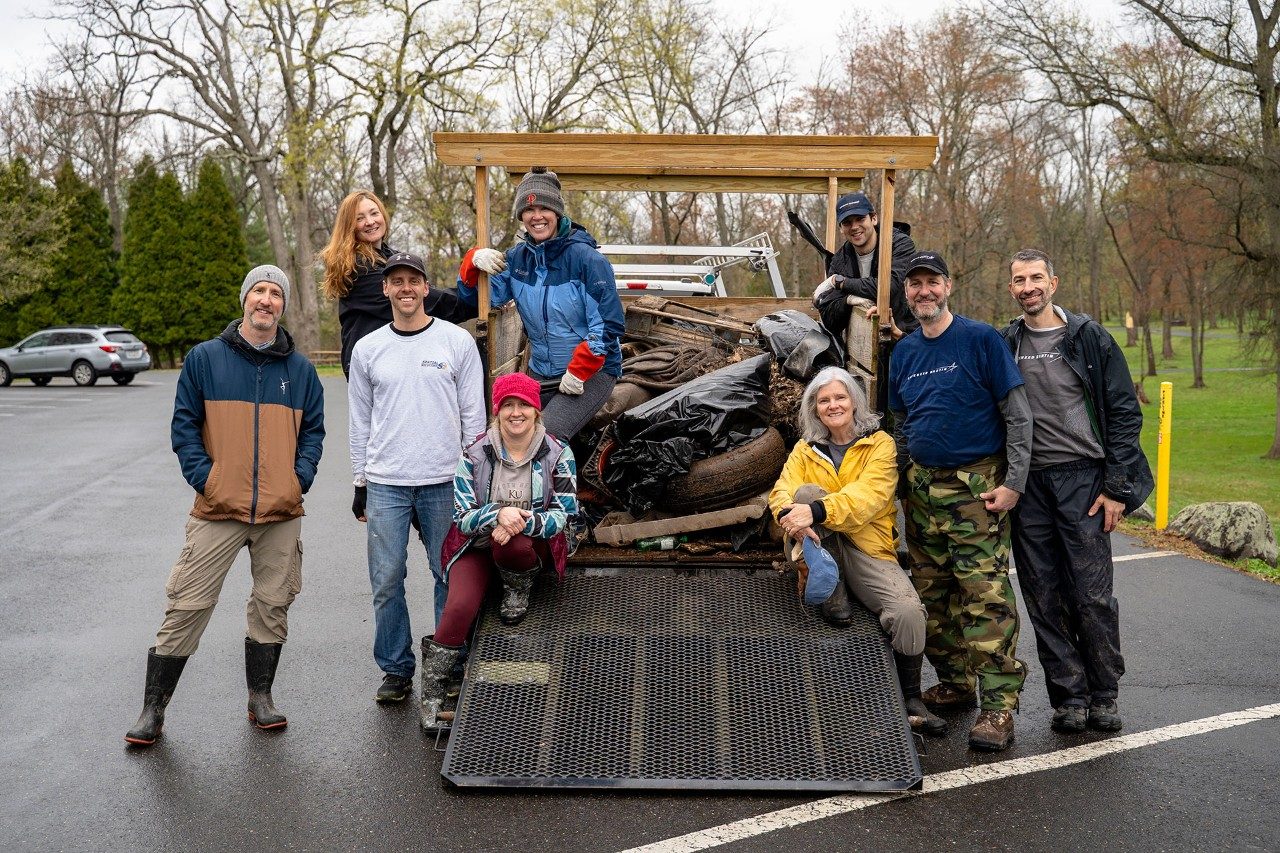
Lockheed Martin is committed to supporting the communities where we live and work. For example, our Space business area has multiple partnerships focused on environmental sustainability including our collaboration with the Denver Zoo Conservation Alliance, which introduced bison into the landscape to help with fire prevention, and the Perkiomen Watershed Conservancy, which engaged Lockheed Martin volunteers to provide STEM education lessons to young students. Our employees also mentor students and help restore sea grass through the East Coast Zoological Society of Florida. Additional partnerships focus on wildfire prevention and restoration. In 2025, Lockheed Martin invested $1.5 million in non-profit organizations focused on wildfire resiliency.
employee-wellness

Next Generation Chemical Safety

To protect our employees, customers and the environment, Lockheed Martin routinely works to reduce risks associated with hazardous chemicals. After studying the cleaning cycle of various robotic spray applicators at our Fort Worth, Texas, facility, we discovered using a more environmentally robust spray coating meant we could reduce our cleaning solvent usage by 16.5%. The process change achieved a nearly 16,000 pound reduction in volatile organic compounds (VOCs) each year, as well as an associated cost savings to the program.
unlocking-potential-neurodiverse

Expanding Use of Alternate Aviation Fuels

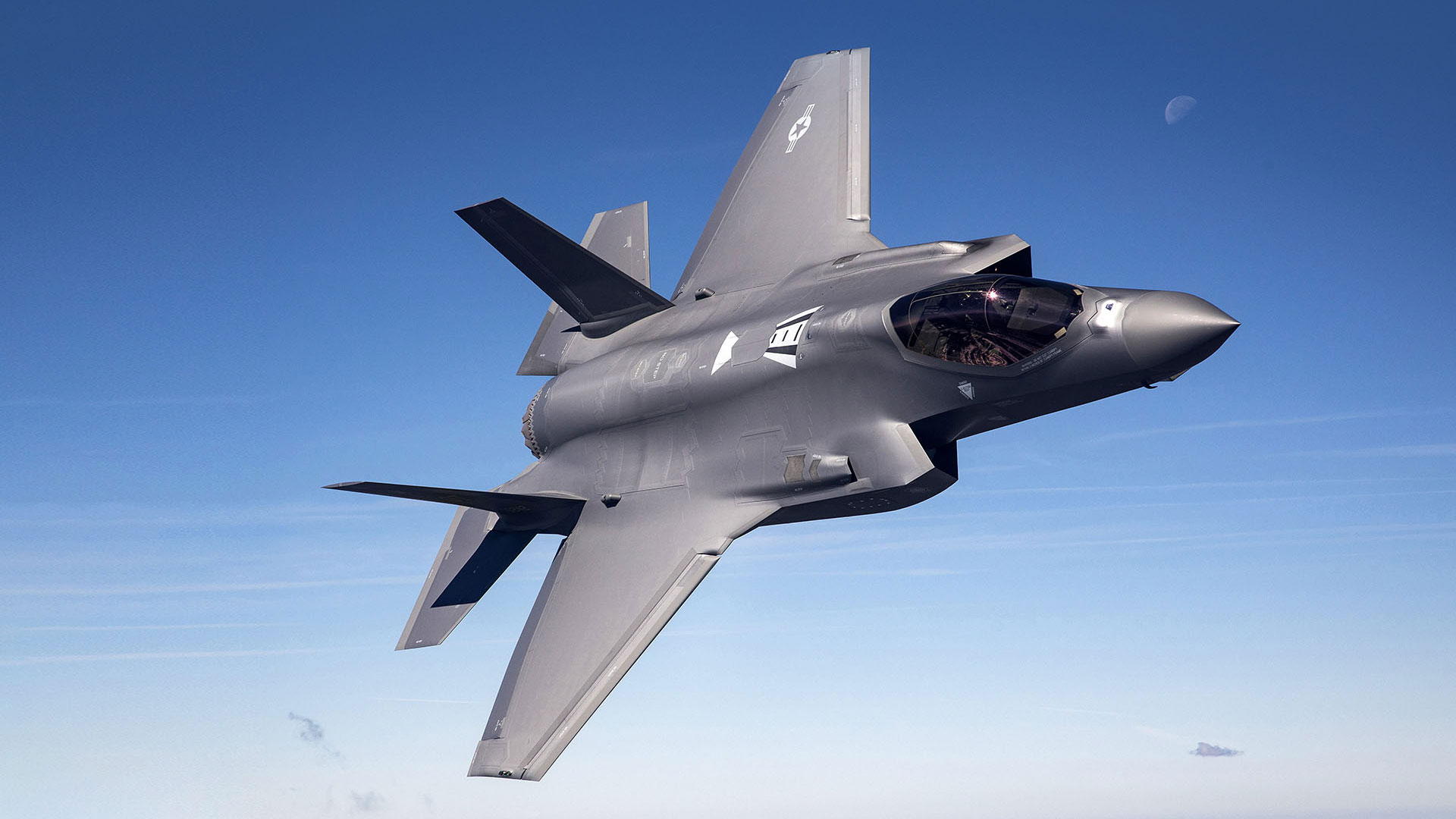
Recognizing the benefits to our environment, our business and the defense industry, Lockheed Martin drives innovation in sustainable energy solutions, including supporting the use of alternative aviation fuels. For example, in 2025, Lockheed Martin approved use of synthetic aviation turbine fuels (SATF) in three air programs—the F-35, F-16 and C-130.  SATFs provide customers with increased operational flexibility and reduced logistical dependencies. Accommodating new fuel sources helps ensure readiness for customer missions by diversifying the supply chain while maintaining operational excellence. To learn more, you can read our press release.
reducing-wildfire-risk

Advancing Aerial Firefighting Technologies

Lockheed Martin Sikorsky is partnering with the California Department of Forestry and Fire Protection (CAL FIRE) to expand the research, innovation and operational capabilities of autonomy-enabled aircraft to be used in firefighting efforts. Sikorsky has long supported firefighting operations in California, including with our specialized aerial firefighting helicopter, FIREHAWK, that has been in use for 25 years. This new five-year collaboration will explore the development of a new FIREHAWK helicopter to further enhance the safety and efficacy of CAL FIRE operations by reducing pilot workload, improving situational awareness, and giving first responders the flexibility to perform complex missions in dangerous and deteriorating conditions, day or night. 

Sikorsky’s initiative is part of Lockheed Martin's broader focus on accelerating the development and integration of digital technology to support faster decision-making capabilities for wildfire management, known as 21st Century Firefighting. This includes a range of solutions, such as firefighting fixed-wing aircraft, including the C-130 Hercules, and firefighting intelligence, which leverages AI-enabled technology to provide near real-time intelligence to first responders.

inspiring-next-gen

Inspiring the Next Generation of Ethical Innovators

At Lockheed Martin, we are committed to voicing our values. To raise awareness about business ethics and contribute to the ethical development of the future workforce, Lockheed Martin hosts an annual, award-winning Ethics in Engineering Case Competition for college and university students. In 2025, at the 8th annual event, over 200 participants from schools across the country tackled a business ethics case on firefighting intelligence, leveraging AI and human input to develop solutions for wildfire management. A team from Texas A&M University took first place in the competition in a closely contested final match against a team from Pennsylvania State University. 
expanding-synthetic-aviation

Improving Wing Structure Lifespan and Impact
Based on an updated rigorous testing program, the C-130J's wing structure has proven to offer nearly 40% more lifespan compared to initial estimates. The recent testing, initiated and funded by the U.S. Air Force and the Royal Canadian Air Force, pushed the wing to its limits by simulating the stresses and strains of real-world flying conditions. The U.S. Air Force provided a C-130 Enhanced Service Life center wing, two outer wings and a center fuselage for the Wing Durability Test (WDT). After several years of testing, the WDT results exceeded expectations and validated the C-130J wing life to be an astounding 122,500 equivalent flight hours, previously estimated to be 90,000 equivalent flight hours. The test result solidified the C-130J's position as the most capable and reliable tactical airlifter in the world and validated the aircraft's durability to operate in challenging operational environments well into the future.
Golden Eaglet Rescue

Protecting a National Treasure

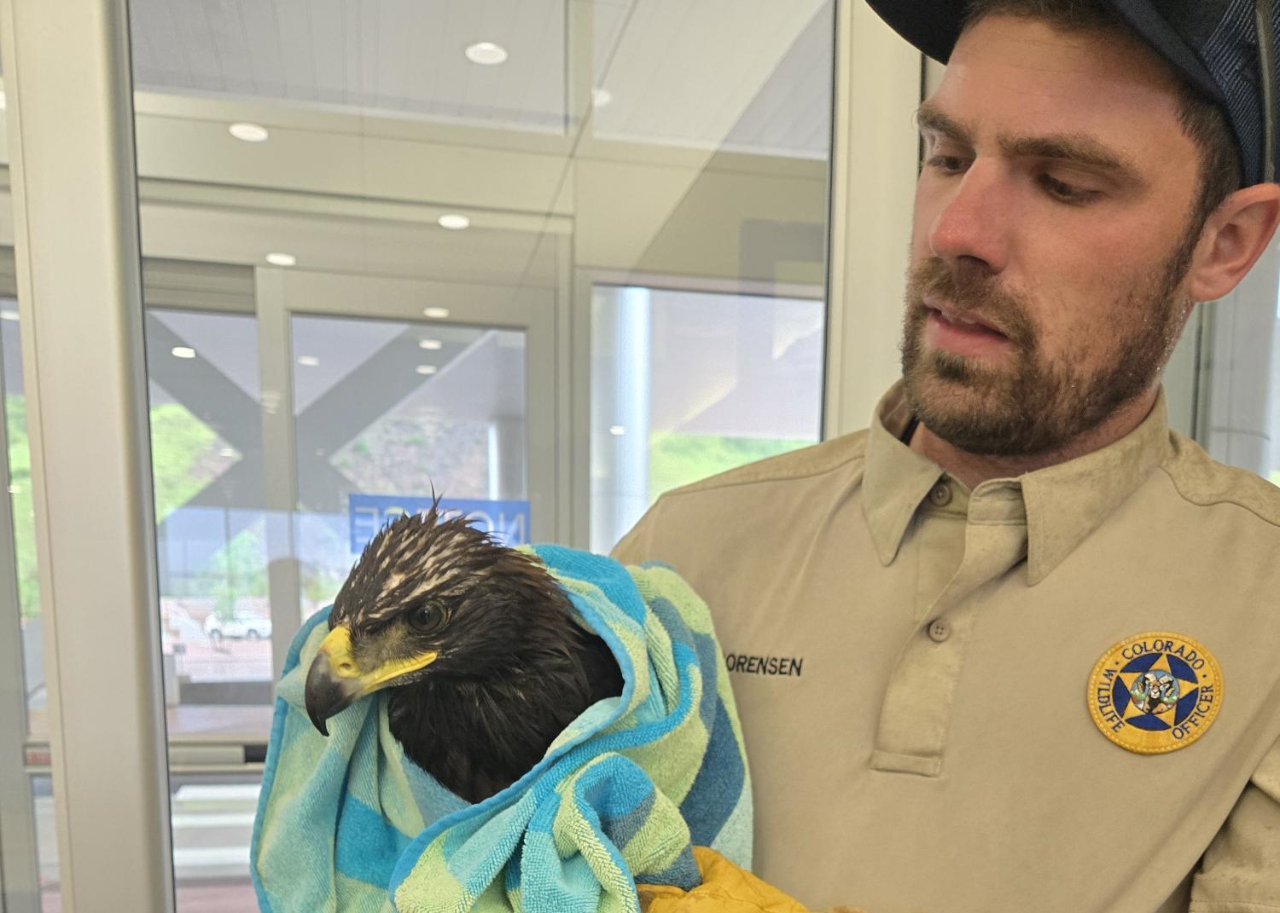
Our Deer Creek, Colorado, site is home to a golden eagle’s nesting site, which we are committed to protecting and preserving. Each year, we balance the need to maintain and improve the facility with strict noise and activity guidelines imposed by the county to ensure the eagles are not disturbed during their breeding and nesting season, typically March through July. Our team also monitors the eaglets as they grow and develop. In June 2025, the team noticed one of the new eaglets was in distress and contacted Colorado Parks and Wildlife. The eaglet was taken to a local rehabilitation facility for care, treatment and recovery. The quick action of our team and successful rescue of the eaglet demonstrates our commitment and sense of responsibility to protect our wildlife and ecosystem.

Last updated: May 2026